C1 has two bards, and they’re opposites. The Elf Swordsinger sings defense, speed and crit rate. The Dark Elf Bladedancer dances damage, crit damage and mage power.
Both are equally viable. They just buff different things, and any good party runs one of each.
Quick pick
- Swordsinger: sturdy sword-and-shield support who doubles party crit rate. Always invited, hard to kill.
- Bladedancer: dual-sword support with offensive dances, Hex and Power Break. Huge party value, fragile body.
This class guide is part of our Lineage 2 Chronicle 1 class series. For the private-server rules we mention, see our L2 Reborn Legacy x1 guide.
Table of contents
Swordsinger: the crit engine
Elf fighter · heavy armor and shield · seven songs
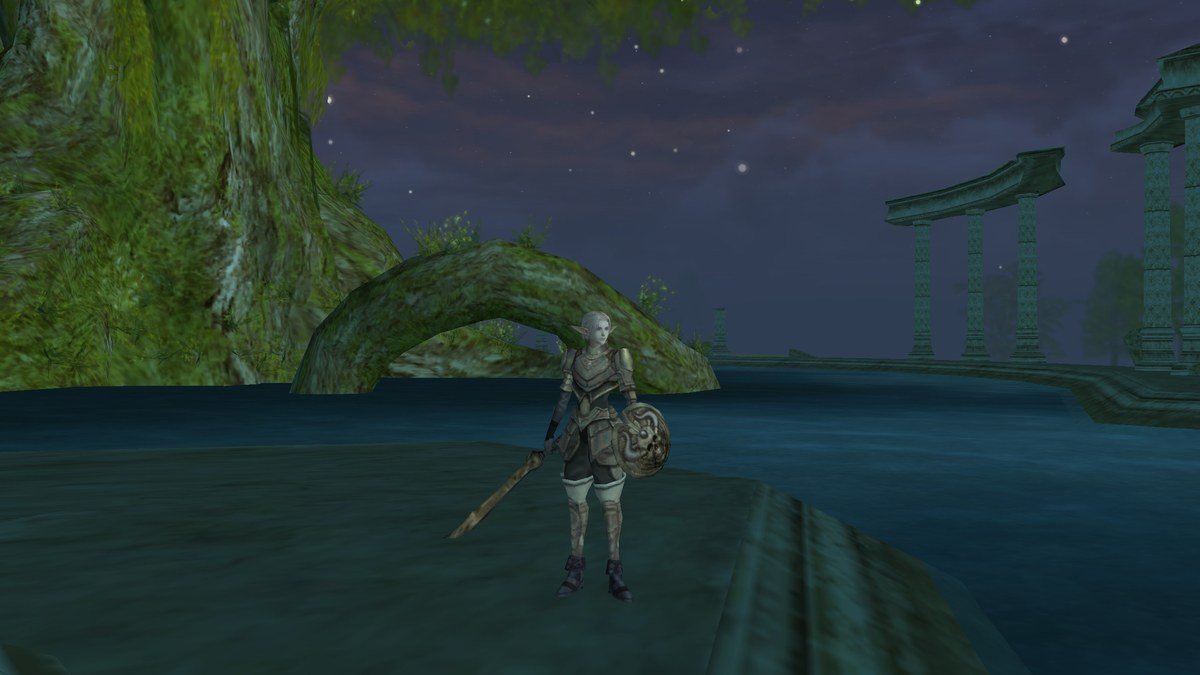
The Swordsinger is a tanky support that turns a physical party into a crit machine. It’s the class every archer and dagger group asks for first.
The C1 songs
Every song lasts 2 minutes. The effect values below are approximate C1 values.
| Song | Level | Effect |
|---|---|---|
| Song of Warding | 40 | Party M.Def about +30% |
| Song of Invocation | 43 | Defense against undead |
| Song of Wind | 46 | Party run speed about +15% |
| Song of Hunter | 49 | Multiplies party crit rate (about ×2) |
| Song of Life | 52 | Party HP regen about +20% |
| Song of Earth | 55 | Party P.Def about +15% |
| Song of Water | 58 | Party evasion +10 |
Why Song of Hunter matters so much
It multiplies crit rate instead of adding to it. With a Prophet‘s Focus, archers and daggers go from occasional crits to critting about every other hit. That cuts kill time and soulshots per kill, often turning an Adena-losing grind into a profitable one.
Song costs
Each extra song you sing while others are running costs more MP than the last. With a Bladedancer in the party, alternate song, dance, song, dance to keep costs down.
Other skills
Outside the songs, the Swordsinger keeps a solid Elf knight kit. Holy Blade (lv 43) adds holy damage and shines in undead zones, while Entangle (lv 49) and Sprint (lv 52) give it a 2-minute slow and permanent speed.
Sword Symphony (lv 55) adds an AoE sword attack. Spirit Barrier, Elemental Heal and cures cover self-protection, and the Elven Knight tools (Aggression on monsters, Ultimate Defense, Deflect Arrow) let it off-tank.
How it plays
In parties: keep songs up every 2 minutes, pull with your speed, off-tank stray mobs and Entangle dangerous targets. Solo: self-buff, use your own Song of Hunter, and many Swordsingers kite with a bow.
At a glance
| Fun | Newbie-friendly | Solo | Party demand | Gear dependency | Running cost |
|---|---|---|---|---|---|
| 3/5 | 5/5 | 2/5 | 5/5 | Low | Low |
- Popularity forecast: medium. Fewer players pick it than the Bladedancer, so a good Swordsinger is always welcome.
- If you’ve played: an FFXIV Bard’s party buffs on a sword-and-shield frame, or a WoW Paladin running auras.
- Best duo partner: any archer or dagger, the classes that get the most out of Song of Hunter.
Our take
The Swordsinger might be the safest “I’ll always have something to do” pick in C1. You’ll get party invites constantly, because every archer and dagger wants Song of Hunter, and on Reborn nobody can box one. Is it exciting?
Not always. A lot of your night is refreshing songs every two minutes and keeping an eye on the pull. But it’s relaxed, forgiving, hard to kill, and great for a newer player who’d rather learn the game inside a group than struggle alone.
Solo leveling is slow, so plan to party. There are usually fewer Swordsingers than a server needs, which is exactly why they’re so valuable.
Pick the Swordsinger if you want guaranteed party spots and a sturdy, useful support role.
Bladedancer: the offensive bard
Dark Elf fighter · dual swords · seven dances · Hex

The Bladedancer is the damage side of bard support. Its dances make everyone hit harder, and its own kit adds Dark Elf debuffs on top.
The C1 dances
Dances need dual swords equipped and, like songs, get more expensive the more you stack. The effect values below are approximate C1 values.
| Dance | Level | Effect |
|---|---|---|
| Dance of Fire | 40 | Party crit damage, about +50% |
| Dance of Light | 43 | Holy damage on attacks |
| Dance of Inspiration | 46 | Party accuracy |
| Dance of Mystic | 49 | Party M.Atk, about +20% |
| Dance of Concentration | 52 | Fewer cast interruptions, more cast speed |
| Dance of Warrior | 55 | Party P.Atk |
| Dance of Fury | 58 | Party attack speed |
Other skills
Besides dancing, the Bladedancer brings Dark Elf debuffs. Hex (lv 40) lowers enemy P.Def and Power Break (lv 52) lowers their P.Atk, while Freezing Strike, Sting, Poison and Drain Energy add slows, damage over time and a small self-heal.
Confusion (lv 46) and Poison Blade Dance (lv 55) round it out. Dual Weapon Mastery matters twice over: dual swords are both your weapon and your dancing requirement.
What makes it valuable
It multiplies the Swordsinger. Song of Hunter makes more crits, and Dance of Fire makes them bigger. Together they’re the core of C1 physical burst.
Mage parties love it. Dance of Mystic and Concentration are the best mage buffs outside a Shillien Elder’s Empower.
How it plays
Dance every two minutes, alternating with the Swordsinger if you have one, Hex the big targets, and fight with dual swords in between.
Watch out for
CON 32 means stuns and focus fire hit you hard. And because dances need dual swords, there’s no shield to fall back on, so you’re far less durable than a Swordsinger.
At a glance
| Fun | Newbie-friendly | Solo | Party demand | Gear dependency | Running cost |
|---|---|---|---|---|---|
| 4/5 | 3/5 | 2/5 | 5/5 | Medium | Low |
- Popularity forecast: high. Dark Elf looks, dual swords and dances that make big numbers make it the more popular of the two bards.
- If you’ve played: an FFXIV Dancer, the closest match in any modern MMO.
- Best duo partner: any fighter for burst, or any nuker for Dance of Mystic and Concentration.
Our take
The Bladedancer is the bard for people who still want to feel like a fighter. You’re swinging dual swords, throwing Hex and slows, and when you drop Dance of Fire before a fighter‘s burst, you can practically watch the boss melt.
It’s a little more demanding than the Swordsinger because you’re squishier and juggle more, but it’s not hard to learn. Solo is doable but slow. This class lives in parties.
It’s usually the more popular of the two bards, so you’ll see more Bladedancers than Swordsingers. A good one still never lacks an invite, because every party wants dances.
Pick the Bladedancer if you want an offensive support role that powers up both physical and mage parties.
Swordsinger or Bladedancer: songs vs dances

Base stats
| Class | Race | STR | DEX | CON | Run speed |
|---|---|---|---|---|---|
| Swordsinger | Elf | 36 | 35 | 36 | 125 |
| Bladedancer | Dark Elf | 41 | 34 | 32 | 122 |
Neither bard is the better pick. Both are equally viable, and the real difference is what they add to a party: the Swordsinger’s songs lean toward crit rate and defense, the Bladedancer’s dances toward damage and mage power.
| What the party needs | Swordsinger song | Bladedancer dance |
|---|---|---|
| Crits | Song of Hunter: more crits (crit rate ×2) | Dance of Fire: bigger crits (+50% crit damage) |
| Physical damage | – | Dance of Warrior (P.Atk), Dance of Fury (attack speed) |
| Defense | Song of Earth (P.Def), Warding (M.Def), Water (evasion) | – |
| Mages | Song of Warding protects them | Dance of Mystic (M.Atk), Concentration (cast speed) |
| Utility | Song of Wind (speed), Life (HP regen), Invocation (undead) | Dance of Light (holy damage), Inspiration (accuracy) |
The two multiply each other. Song of Hunter makes more crits and Dance of Fire makes them bigger, which is why any good party runs both. With both bards in a group, alternate song, dance, song, dance to keep MP costs down.
So pick by how you want to play. The Swordsinger is the sturdy one, with a shield, heavy armor and off-tank tools. The Bladedancer is the offensive one, fighting with dual swords and Hex but with less to fall back on.
Popularity tips the scales a little. Bladedancers are usually more common, so a Swordsinger often has an easier time finding a party spot.
Common misconceptions

A few myths come up again and again. The Swordsinger does have Holy Blade and Sprint in C1, at 43 and 52. And Song of Hunter doesn’t add a flat bit of crit: it multiplies crit rate, which is why high-crit classes love it.
“One bard is as good as the other” is half true. Both are equally viable, but they do different jobs: crit rate and defense on the Swordsinger, crit damage and mage buffs on the Bladedancer.
The Bladedancer can’t dance with just any weapon, either. It needs dual swords. And neither bard is a pure buff bot: the Swordsinger off-tanks and pulls, while the Bladedancer Hexes and slows.
Common mistakes and pro tips

Mistakes
The costliest habit is stacking songs or dances back to back. Each one costs more than the last, so alternate song and dance when both bards are in the party. And don’t let them drop mid-pull: two minutes goes fast.
On a Swordsinger, Aggression in PvP is wasted, since it only works on monsters, and skipping Holy Blade in undead zones throws away one of your best solo tools. On a Bladedancer, trading stuns head-on is a mistake, because CON 32 means they stick.
Pro tips
A Swordsinger makes a great bow puller: tag single mobs from range while Song of Wind keeps you ahead of them. In an emergency, Song of Earth plus Ultimate Defense plus Aggression holds a bad pull while the party resets.
A Bladedancer should time Dance of Fire and Warrior right before the damage dealers burst, and Hex the boss so every physical attacker hits harder. Pair Song of Water with an Elven Elder’s Agility and light-armor allies become very hard to hit.
Reborn rules that change bard play
Reborn bans dual-boxing and buff selling, so nobody can run a personal bard, and real Swordsingers and Bladedancers stay in demand. AoE skills like Sword Symphony hit a capped number of targets.
Monsters don’t drop your items when you die, but each PvE death costs XP: 10% at level 1, easing to 4% by level 49.
Source: Reborn Legacy server features for Reborn’s rule changes; skill levels and base stats from the l2db C1 database (Swordsinger and Bladedancer).
Lineage 2 C1 bard FAQ
- Swordsinger or Bladedancer for my clan? Ideally both. If you can only have one, archer and dagger groups want the Swordsinger, and mage groups want the Bladedancer.
- How does Song of Hunter work? It multiplies crit rate rather than adding a flat amount, so it helps high-crit classes like daggers and archers most.
- Which bard should a mage party bring? The Bladedancer, for Dance of Mystic and Dance of Concentration.
- Does the Bladedancer need dual swords to dance? Yes. Dances only work with dual swords equipped.
- Can a Bladedancer debuff? Yes. Hex at 40 and Power Break at 52, plus Freezing Strike, Sting and Poison.
- Can a Swordsinger tank? It can off-tank. It has heavy armor, a shield, Ultimate Defense and Aggression, but its main value is its songs.
More Lineage 2 C1 guides
- Lineage 2 C1 Dagger Classes: Which One to Play
- Lineage 2 C1 Tank Classes: Which One to Play
- Lineage 2 C1 Archer Classes: Which One to Play
- Lineage 2 C1 Summoner Classes: Which One to Play
- Lineage 2 C1 Fighter Classes: Which One to Play
- Lineage 2 C1 Nuker Classes: Which One to Play
- Lineage 2 C1 Healers and Buffers: Which to Play
- Lineage 2 C1 Dwarf Classes: Bounty Hunter or Warsmith